free Iran
Showing posts with label (PMOI/MEK). Show all posts

Wednesday, September 13, 2017

ANALYSIS: Revisiting Iran’s 9/11 connection


By Heshmat AlaviSpecial to Al Arabiya EnglishMonday, 11 September 2017
Text size A A A

16 years have passed since that tragic day, September 11, 2001, when over 3,000 innocent people lost their lives in the “the largest mass casualty terrorist attack in US history.” The course of modern history changed as we know it.
For more than 15 of these past years the policy of appeasement has withheld the international community from adopting the will needed to bring all the perpetrators of this hideous crime to justice.
Iran has a history of fueling foreign crises to avoid responding to its own domestic concerns. 9/11 provided the window of opportunity to derail world attention to other states and buy Tehran crucially needed time.
Unfortunately, the regime ruling Iran has been the main benefactor of the 9/11 aftermath. As a result of two wars in the Middle East the entire region has been left wide open for Tehran to take advantage of and spread its sinister ideology and sectarianism.
It is hence necessary to highlight Iran’s role in 9/11 attacks and demand the senior Iranian regime hierarchy involved in blueprinting and implementing this attack to be held accountable before the law.

Warmongering history

For the past four decades Iran has been ruled by a clerical regime that is simply incapable of providing the society’s needs and demands. To this end, Tehran has resorted to a policy of exporting the “Islamic Revolution” by meddling in neighboring and distant countries to create havoc.
History has recorded how Iraq invaded Iranian territories and caused the beginning of the devastating eight-year-long Iran-Iraq War. Several months before Iraq launched its military attack, Ayatollah Khomeini, accused of hijacking Iran’s 1979 revolution, described then Iraqi leader Saddam Hussein as a “hypocrite” and a “threat for the Iraqi people.”
Khomeini went as far as calling on the Iraqi people to “place their entire efforts behind destroying this dangerous individual” and the Iraqi army to “flee their forts” and to “rise and destroy this corrupt individual, and appoint another individual in his place. We will support you in this regard.”
Fast forward more than two decades, and again with Iraq in its crosshairs, Iran began what has been described as a very complicated effort to literally deceive the US intelligence community.
Ahmad Challabi, dubbed as “The Manipulator” by The New Yorker, was Iran’s front man in feeding the US false information regarding Iraq possessing weapons of mass destruction to justify Washington’s 2003 invasion of Iraq. The war ultimately eliminated the main obstacle before Iran’s hidden occupation of Iraq and full blown meddling across the Middle East.
Looking further west in the region, Iran ordered Bashar Assad in Syria and former Iraqi prime minister Nouri al-Maliki to facilitate the escape of thousands of al-Qaeda prisoners. This development, parallel to the ruthless crackdown of the two countries’ Sunni communities, led to the rise of ISIS.
This entire episode provided Iran the necessary pretext to justify its presence in Iraq and Syria, especially through tens of thousands of proxy forces.
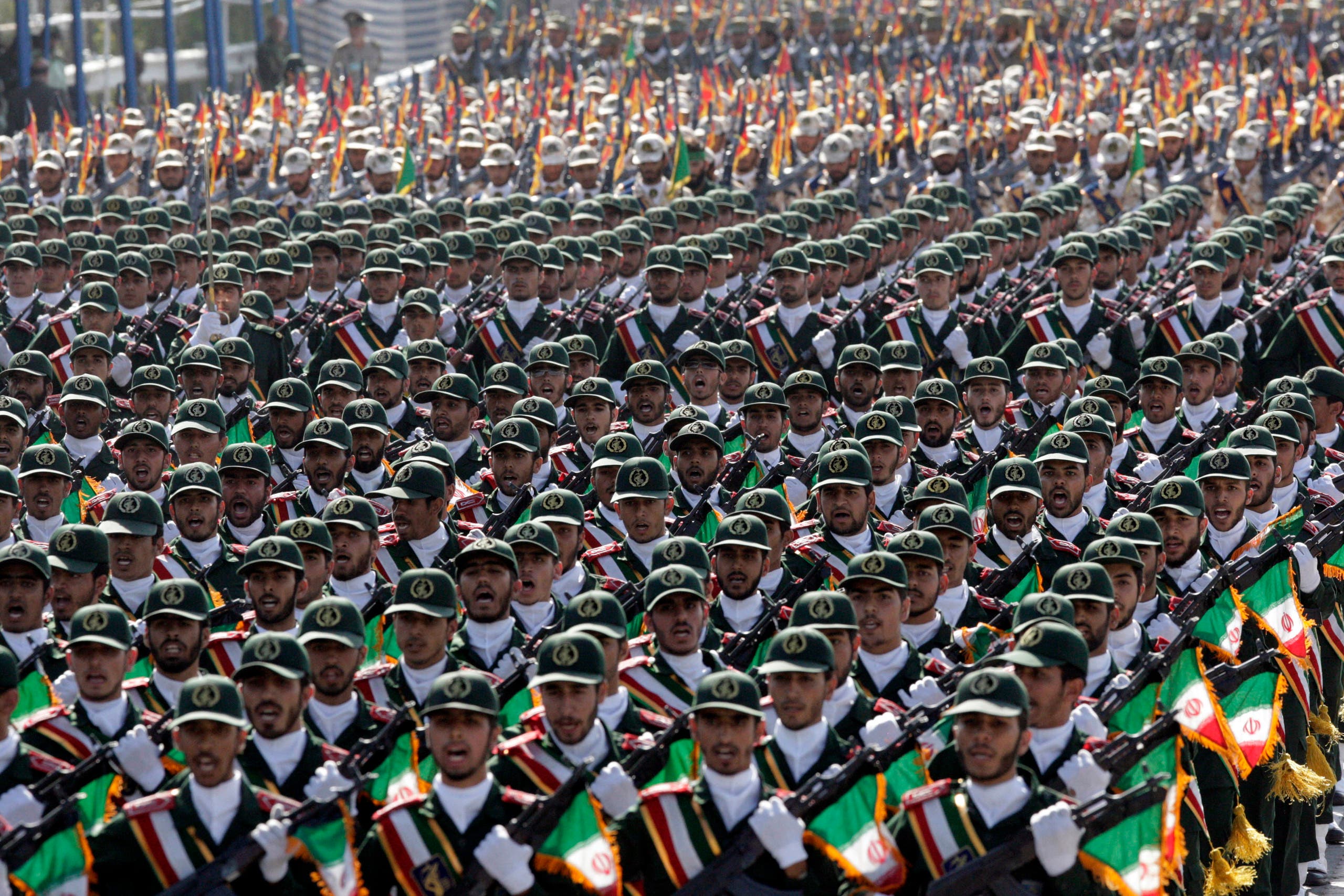
Iran’s Revolutionary Guard troops march, during a military parade commemorating the start of the Iraq-Iran war 32 years ago, in front of the mausoleum of the late revolutionary leader Ayatollah Khomeini, just outside Tehran, Iran, on Sept. 21, 2012. (AP)

The 9/11 facts

A bipartisan commission in Washington investigated the 9/11 attacks reported strong evidence exists showing Iran “facilitated the transit of al-Qaeda members into and out of Afghanistan before 9/11, and that some of these were future 9/11 hijackers.”
Up to 10 of the 14 hijackers involved in 9/11, and specifically behind obtaining control of the four aircrafts, were allowed passage through Iran from October 2000 to February 2001. Reports indicate Iran has a history of ordering certain instructions to not harass transiting al-Qaeda members.
Such documents also show Iran’s offspring, the Lebanese Hezbollah, trained alongside al-Qaeda members during the 1990s, leading to the former possibly adopting the latter’s suicide bombing tactics.
“…al-Qaeda may have collaborated with Hezbollah and its Iranian sponsors in the 1996 bombing of the Khobar Towers, a key American military barracks in Saudi Arabia. Previously, the attack had been attributed only to Hezbollah, with Iranian support,” according to a TIME report.
Evidence shows that five years later, “Iran and Lebanese Shiite group Hezbollah being involved ‘firsthand’ in the 9/11 terrorist attacks,” an Al Arabiya feature said.
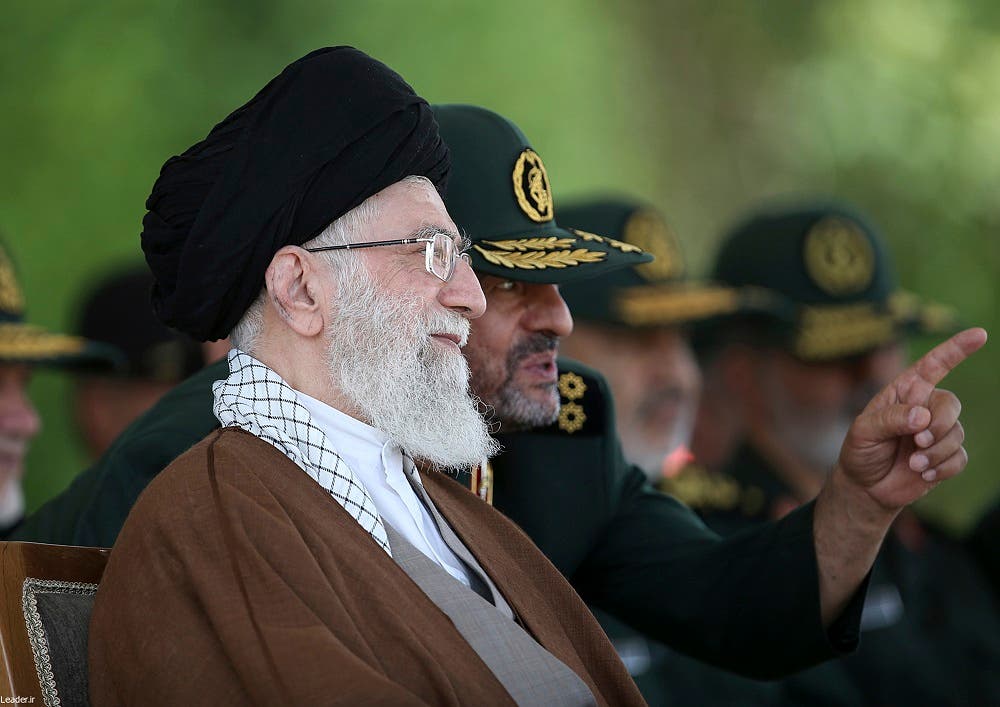
Supreme Leader Ayatollah Ali Khamenei with Revolutionary Guard commander Mohammad Ali Jafari on May 20, 2015. (Office of the Iranian Supreme Leader via AP, File)

Facilitation and execution

In early 2016, Judge George Daniels of New York “condemned Iran for facilitating the execution of the terrorist attacks that hit both New York and Washington.” This lawsuit provided an in-depth look into nearly 300 cases of Iran’s involvement in funding terrorism and collaborating with terror organizations, including al-Qaeda.
“The trial revealed that bin Laden, current leader of al-Qaeda Ayman al-Zawahiri, Hezbollah’s Imad Mughniyeh – assassinated in 2008 – and other Iranian attaches had met in Sudan to establish an alliance supporting terrorism,” the piece adds.
To those who may argue Shiite Iran would never support a Sunni al-Qaeda, it is hardly unprecedented to find such backing by Tehran for non-Shiite terror groups. Sunni terrorists that share Iran’s goals, such as Hamas and Islamic Jihad, alongside those who target US interests, have for long enjoyed Iran’s support.
As mentioned above, “Iran also played an important role in supporting al-Qaeda in Iraq, the progenitor of ISIS. As Michael Weiss and Hassan Hassan noted in their 2015 book ‘ISIS: Insider the Army of Terror,’ AQI head Abu Musab al-Zarqawi was ‘based in Iran and northern Iraq’ for ‘about a year’ after fleeing Afghanistan following the arrival of US-led coalition forces in Operation Enduring Freedom,” according to The Washington Times.
As cited earlier, Iran also stands accused of having “foreknowledge of the 9/11 attacks,” according to a 2011 court filing quoting two Iranian intelligence service defectors. These individuals were “in positions that gave them access to sensitive information regarding Iran’s state sponsorship of terrorism,” the piece continues.
The court went on to demand damages due to Iran’s “direct support for, and sponsorship of, the most deadly act of terrorism in American history,” according to The New York Times. The suit also contends that in addition to facilitating the 9/11 hijackers training and travel, Iran and Hezbollah played an important role in the escaping of numerous al-Qaeda operatives by providing safe haven inside Iran.
“… 9/11 depended upon Iranian assistance to Al Qaeda in acquiring clean passports and visas to enter the United States,” the NYT cited Thomas E. Mellon Jr., a former lawyer for the 9/11 victims’ families, saying by quoting ten specialists working on Iran and terrorism.
“I am convinced that our evidence is absolutely real—that Iran was a participant in the preparations for 9/11,” Mellon said in another interview with The Daily Beast.
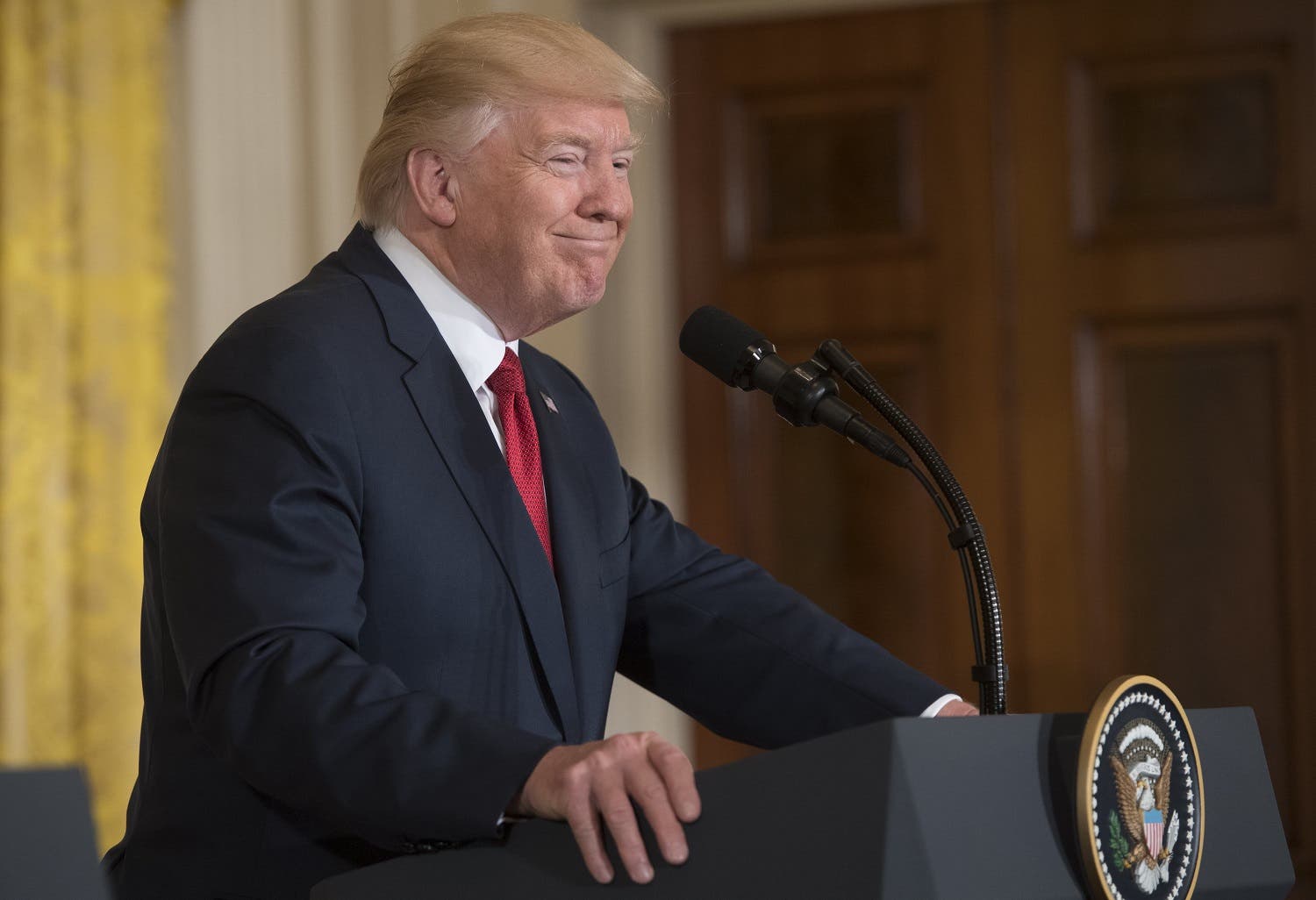
“Iran has not lived up to the spirit of the agreement, and they have to do that,” Trump said. (AFP)

Lack of will

Iran would have every interest in facilitating the 9/11 attacks to divert international attention onto its rivals, while providing the opportunity for its forces and proxies to take full advantage of rendering mayhem across the region. A glance of the current status in Iraq, Syria, Yemen and Lebanon proves this point.
For too long investigations have failed to shed the necessary light into Iran’s role into the 9/11 attacks. Even the Commission, accused of never properly grappling the question of Iran’s knowledge prior to 9/11, nearly neglected very important facts gathered by the US National Security Agency about Tehran’s deep involvement in this regard.
The Commission “failed to delve into the files of the National Security Agency, where the Iran intelligence was waiting to be discovered, until the final stages of the commission's inquiry,” according to Philip Shenon’s The Daily Beast article.
“… my suspicions are that the Iranians were probably much more involved than we are led to believe,” Middle East political scientist Dr. Joseph A. Kéchichian said to Al Arabiya.
Staffers formerly working for the 9/11 commission have complained that much of the remaining NSA’s pre-9/11 terrorism database has gone un-reviewed to this very day. This goes as far as suggesting a long slate of 9/11 secrets may have remained hidden for the past 16 years. Do we not owe more to the 9/11 victims and their families?
There is promise seen in the new US administration as it continues to turn up the heat on Iran. Yet until a lack of will prevents the launching of a new genuine inquiry into Iran’s involvement in the 9/11 attacks, it is up to us writers and journalists to dig deep and expose Tehran’s relations with terror groups across the globe, especially those involved in the horrific acts that changed our world 16 years ago today.
All this becomes ever so necessary as Tehran covertly pursues its nuclear weapons drive and overtly seeks payload delivery capability through ballistic missiles. We must learn from the mistakes made in regards to North Korea and go the limits to prevent a rogue regime such as Iran from going down the same path.
SOURCE : ANALYSIS: Revisiting Iran’s 9/11 connection


Posted by Unknown at 12:06 PM No comments:
Email ThisBlogThis!Share to XShare to FacebookShare to Pinterest
Labels: (PMOI/MEK), Heshmat Alavi, Khomeini, Warmongering history

Saturday, September 9, 2017

AFTER HER ELECTION AS PMOI/MEK SECRETARY GENERAL, ZAHRA MERRIKHI PLEDGES TO BRING FREEDOM TO IRAN

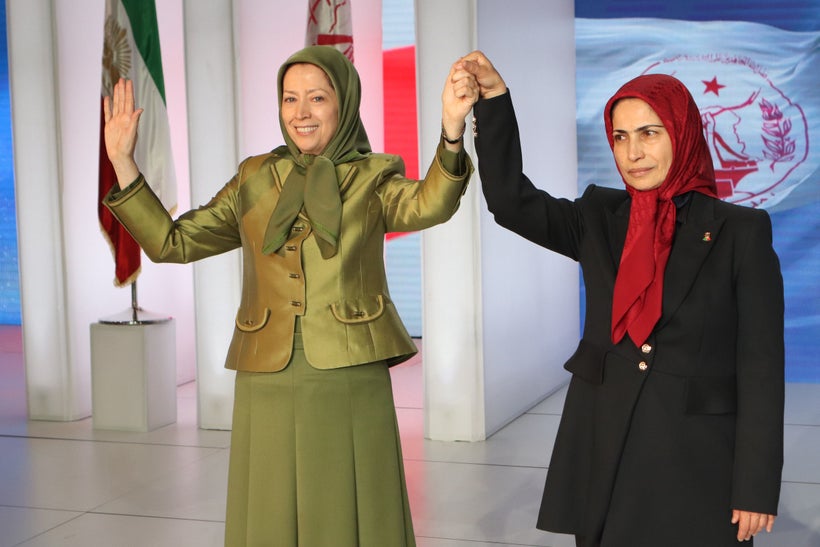
Masoud Dalvand –TDO-(AMERICA) The People’s Mojahedin Organization of Iran, PMOI, (the Mujahedin-e Khalq, MEK) held its annual Congress simultaneously in Tirana and five other countries. On the PMOI’s 52nd anniversary, the Congress elected Ms. Zahra Merrikhi as its new Secretary General. Ms. Zohreh Akhyani, the Secretary General since 2011, chaired the Congress.
According to the PMOI’s bylaws, the Secretary General is elected to a renewable term of two years. The election is held in three phases. In the first phase, members of the PMOI Central Council, and in the second the organization’s officials and cadres in different departments, cast their votes in secret ballots. In the third phase, at the PMOI Congress, all members vote by raising their hands.
In the first phase, on August 20, 2017, Ms. Merrikhi was elected from among 12 candidates by a majority of the Central Council members. The four leading candidates were put on the ballot for the second phase, which was held on September 3, 2017. Ms. Merrikhi received a majority of the votes cast in ten different PMOI centers. In the final phase, during the PMOI Congress, Ms. Merrikhi was unanimously elected Secretary General.
Previously, Ms. Merrikhi was coordinator for the offices of Mrs. Maryam Rajavi, the President-elect of the National Council of Resistance of Iran (NCRI), and Vice-President of the PMOI’s Central Council.
Born in 1959 in the city of Qa’emshahr in the northern Province of Mazandaran, Ms. Merrikhi became acquainted with the PMOI during the 1979 anti-Monarchic Revolution and joined the PMOI after the Shah’s overthrow. She was soon appointed head of the women’s section in Qa’emshahr, and later became a member of the editorial board of the PMOI publication in Mazandaran, called Talavang.
In 1981, she was transferred to Tehran and acted as liaison between the PMOI and its branches in the forests of northern Iran. In 1984, she moved to PMOI bases in the border region with Iraq, and a year later became a member of the Central Council.
Her younger brother, Ali Merrikhi, was murdered by the Islamic Revolutionary Guards Corps (IRGC) in 1988.
Ms. Merrikhi oversaw PMOI branches in Scandinavia and Germany for some time. In 1991, she became a member of the Executive Committee and was later appointed head of Radio Mojahed, Simay-e Moghavemat (the Iranian Resistance’s television network) and the publication Mojahed.
She became a member of the NCRI in 1992 and was appointed Chairwoman of the Public Affairs Committee.
Ms. Merrikhi had been the coordinator of the offices of Mrs. Rajavii since 2003 and the Vice-president of the PMOI’s Central Council since 2004.
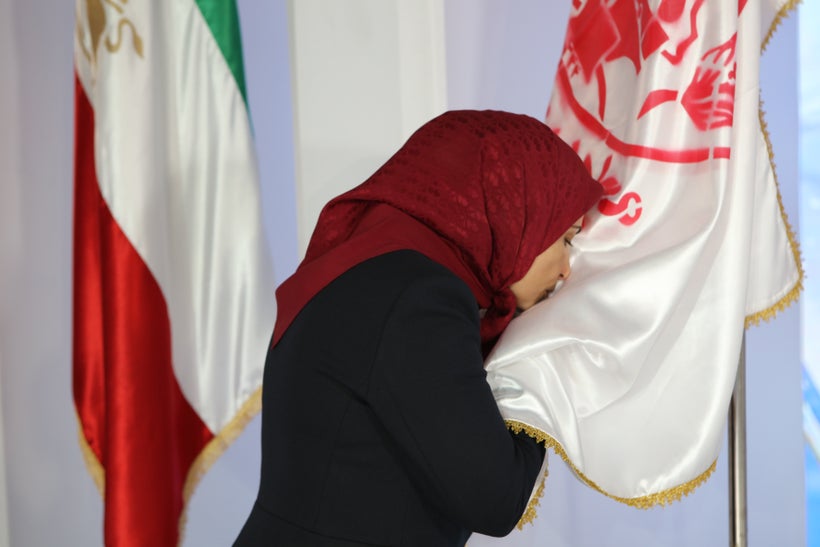
Following her election as Secretary General, Mrs. Merrikhi was sworn in, placing her hand on the Holy Quran and paying her respects to the Iranian flag and PMOI emblem. She pledged to remain faithful to the enormous responsibilities with which she has been entrusted. Ms. Merrikhi vowed to devote all her abilities and those of the PMOI as a national treasure of the Iranian people, to establish freedom and democracy in Iran.
The new Secretary General expressed her appreciation for the efforts of her predecessor, Ms. Akhyani, and Ms. Mojgan Parsai, the President of the PMOI’s Central Council. She lauded their efforts and those of other PMOI officials over the past 14 years, during one of the most dangerous and tortuous periods of the Organizations history in camps Ashraf and Liberty.
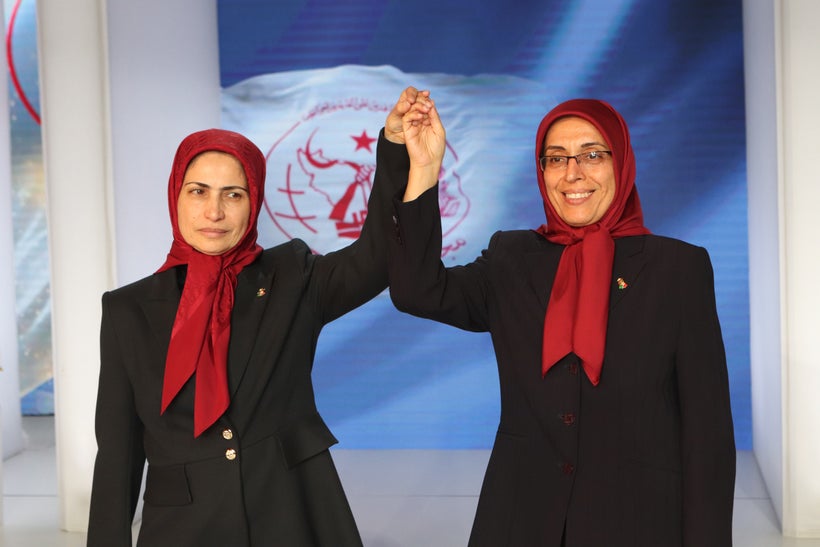
“Today, the PMOI, with the help of the Iranian people, is prepared as never before to overthrow the clerical regime,” Ms. Merrikhi said, adding that the PMOI has now 18 co-Secretaries General (including seven former Secretaries General). Ms. Merrikhi also introduced Narges Azodanlou, 36, Rabi’eh Mofidi, 35, and Nasrin Massih, 39, as new deputies to the Secretary General.
In congratulating the election of Ms. Merrikhi as the new PMOI Secretary General, Mrs. Rajavi described it as a brilliant election, embodying the height of democracy, cohesion, and growth in the PMOI. It heralds the breaking of the spell of repression which will lead to the overthrow of the religious fascism ruling Iran, she added.
source: AFTER HER ELECTION AS PMOI/MEK SECRETARY GENERAL, ZAHRA MERRIKHI PLEDGES TO BRING FREEDOM TO IRAN
Posted by Unknown at 2:23 AM No comments:
Email ThisBlogThis!Share to XShare to FacebookShare to Pinterest
Labels: (PMOI/MEK), Iran, Maryam Rajavi, Mojahedin Organization of Iran

Friday, September 8, 2017

Crisis-riddled Iran Sees Opposition Elect New Secretary General


NCRI

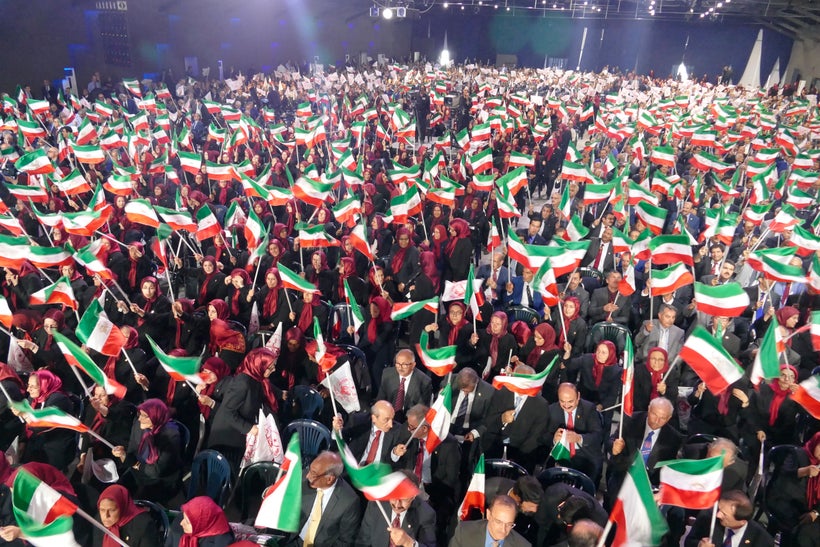
Crowd in Tirana

A new administration in Washington has been ramping up the heat, punishing Tehran for meddling in other states’ affairs and advancing its ballistic missile drive. All the while Supreme Leader Ali Khamenei has seen his representative rejected by two senior Shiite leaders in Iraq, the proxy war in Yemen going south and Tehran’s support to maintain Syria’s Bashar Assad in power eating up crucial resources. Internally, the Iranian people are stepping up their protests to significant scales.
In now daily protests thousands of investors are demanding their savings from state-run institutions, and the city of Baneh in western Iran recently witnessed clashes as locals took to arms to protest the ruthless killing of porters by state security forces. In a parallel significant development, the Iranian opposition People’s Mojahedin Organization of Iran(PMOI/MEK) held its congress on Wednesday marking its 52nd anniversary and sitting to elect a new secretary general.

NCRI

Iran Opposition Election: Crowd in Tirana

This process was held in six different cities, including Tirana, the Albanian Capital, where most MEK members are stationed after their long ordeal in Iraq, along with five other countries. Ms. Zahra Merrikhi was elected as the new MEK Secretary General, replacing Ms. Zohreh Akhiyani, who served from 2011. The MEK Secretary General is elected for one two-year term, which can be extended considering the circumstances.
In view of its unique nature and differences from state or party elections, MEK rules and regulations define the election of a secretary general to be held in three different assemblies.
In the first such assembly, held by members of the MEK Central Council on August 20, 2017, an initial 12 candidates were introduced, of which four reached the next stage with Ms. Merrikhi receiving a majority of the votes.

NCRI

Ms. Merrikhi and Mrs. Rajavi

At the second assembly, held two weeks later, senior MEK officials and cadres casted their ballots for the final four candidates, with Ms. Merrikhi leading the vote tally again. The third and final assembly, held on Wednesday, witnessed all MEK members raising their hands and unanimously electing Ms. Merrikhi as the new MEK Secretary General. Born in 1959, Ms. Merrikhi joined the MEK in the years leading to the 1979 revolution. She was summoned and interrogated several times by the Shah’s intelligence service for her activities. Her younger brother, Ali, was killed by the current Iranian government back in 1988. From 2003 onward she served as the coordinator of the office representing Iranian opposition leader Maryam Rajavi, President of the National Council of Resistance of Iran (NCRI), a coalition of opposition groups including the MEK.
The democratic approach adopted by the MEK in this election process is in stark contrastto that imposed on its compatriots by the ruling clerics of Iran for the past four decades. It also undercuts the oft-repeated, Iran government’s inspired characterization that it has an authoritarian structure. If we were to take the Iran’s presidential “election” into consideration, we would view a selection by an unelected few, far from anything resembling an election in today’s 21st century.

NCRI

Ms. Merrikhi and PMOI Emblem

Subscribe to The Morning Email
Wake up to the day's most important news.
Iran’s so-called presidential “elections,” which banned all women, is a procedure in which all candidates are vetted by a 12 ultraconservative clerics and so-called legal experts, named the Guardian Council, who are directly and indirectly appointed by the Supreme Leader.
All candidates are evaluated for their utter devotion and obedience to the clerical rule and Supreme Leader. Before May’s vote even Mahmoud Ahmadinejad, who served as the president for eight years and Khamenei launched a massive nationwide crackdown in 2009 to quell any opposition to his engineered reelection, was disqualified from this year’s presidential race. As the political establishment in Tehran sees its founding fathers dying one after another and Khamenei himself battling severe health issues and allegedly cancer, there are serious woes about the future of his rule and the ruling clerics in its entirety. And with conservative cleric Ebrahim Raisi – said to be groomed by Khamenei to reach the presidency and eventually succeeding him at his throne – failing to unseat Hassan Rouhani from the presidency, no new face with the necessary majority support is seen to lead this political establishment into its unknown future.

NCRI

Ms. Merrikhi and Ms. Akhyani (previous Secretary General)

It is a complete different story for the MEK leadership, however, as Ms. Merrikhi currently enjoys the support of 18 co-Secretaries General (including seven former Secretaries General) and three deputies from the organization’s younger generation.
Narges Azodanlou, 36, Rabi’eh Mofidi, 35, and Nasrin Massih, 39, all born during or after the 1979 revolution, represent the MEK’s dynamic characteristic and how this organization is able to adapt and deliver young new leaders for this fast-changing world. In short, Merrikhi’s election demonstrates process, structure, depth of leadership ranks, and a genuine and practical commitment to gender equality, especially in leadership positions. “Today, the PMOI, with the help of the Iranian people, is prepared as never before to overthrow the clerical regime,” Ms. Merrikhi said after expressing gratitude to her predecessors and vowing to remain loyal to the MEK’s ultimate objective of establishing freedom and democracy in Iran. Welcoming Ms. Merrikhi’s election, NCRI President-elect Rajavi described this new development as signaling the soon-to-come change of the theocratic ruling in Iran.
——————————————————————————————————————
You can order Dr. Rafizadeh’s books on Here. You can sign up for Dr. Rafizadeh’s newsletter for the latest news and analyses on Here. You can contact him at Dr.rafizadeh@post.harvard.edu or follow him at @Dr_Rafizadeh.
Harvard-educated, Dr. Majid Rafizadeh is a world-renowned businessman, a leading Iranian-American political scientist, president of the International American Council on the Middle East, and best-selling author. He serves on the advisory board of Harvard International Review.
Dr. Rafizadeh is frequently invited to brief governmental and non-governmental organizations as well as speak, as a featured speaker, at security, business, diplomatic, and social events. He has been recipient of several fellowships and scholarships including from Oxford University, Annenberg, University of California Santa Barbara, Fulbright program, to name few He is regularly quoted and invited to speak on national and international outlets including CNN, BBC World TV and Radio, ABC, Aljazeera English, Fox News, CTV, RT, CCTV America, Skynews, CTV, and France 24 International, to name a few. . He analyses have appeared on academic and non-academic publications including New York Times International, Los Angeles Times, CNN, Fareed zakaria GPS, The Atlantic, Foreign Policy, The Nation, The National. Aljazeera, The Daily Beast, The Nation, Jerusalem Post, The Economic Times, USA Today Yale Journal of International Affairs, Georgetown Journal of International Affairs, and Harvard International Review. He is a board member of several significant and influential international and governmental institutions, and he is native speaker of couple of languages including Persian, English, and Arabic. He also speaks Dari, and can converse in French, Hebrew. More at Harvard. And You can learn more about Dr. Rafizadeh on HERE. The post was originally published on the Arab News.
soured:Crisis-riddled Iran Sees Opposition Elect New Secretary General 

Posted by Unknown at 11:47 PM No comments:
Email ThisBlogThis!Share to XShare to FacebookShare to Pinterest
Labels: (PMOI/MEK), Iran, Maryam Rajavi, opposition of Iran, zahra merikhi.

Friday, August 11, 2017

Tortured by 'Moderates'


Iran's dissidents deserve a hearing
AUG 21, 2017 | By KELLY JANE TORRANCE
 Hassan Rouhani was sworn in for his second term as president of Iran on August 5, surrounded by fresh flowers, fervent followers, and around 500 foreign officials. Representatives of the United Kingdom, France, the United Nations, and the Vatican rubbed shoulders with the Syrian prime minister, Hezbollah second-in-command Naim Qassem, Palestinian Islamic Jihad leader and FBI Most Wanted Terrorists list member Ramadan Abdullah Shallah, and murderous Zimbabwean dictator Robert Mugabe. The Westerners didn’t seem uncomfortable in such company; indeed, European Union foreign policy chief Federica Mogherini was described as the star of the show after Iranian members of parliament elbowed through the crowd to take selfies with the diplomat.
But why should they have been bothered? They were in Tehran, after all, to celebrate the renewed rule of a man who has overseen a steady increase in killings—Iran has the world’s highest per capita execution rate. Three days before Rouhani’s inauguration, Amnesty International released a damning report on conditions in the country: “Iran’s judicial and security bodies have waged a vicious crackdown against human rights defenders since Hassan Rouhani became president in 2013, demonizing and imprisoning activists who dare to stand up for people’s rights.” The press release capping Mogherini’s visit didn’t mention the European-based organization’s report—or human rights issues at all—instead focusing on “the EU’s unwavering commitment to” the Joint Comprehensive Plan of Action nuclear deal. It’s unlikely Mogherini brought up the subject even in her private meetings: She was pictured smiling in multiple photo-ops with government officials.
A month earlier, a young Iranian woman told me how she and her fellow reformers feel when they see such images. “We know with every negotiation with this regime, every shaking hand with this regime, it means one more gallows in the streets,” Shabnam Madadzadeh said sadly. “They close their eyes to human rights in Iran,” she said of Westerners who deal with the regime and many members of the media who report on it. “They kill humanity, in themselves firstly, and after that in Iran.”
Madadzadeh speaks with a seriousness that belies her age. In a hound’s-tooth blazer, black pants, glasses with wine-colored frames, and a headscarf in shades of deep rose, the 29-year-old unfurled her passion in complete paragraphs. Her mustachioed and bespectacled 32-year-old brother, Farzad, wore a black suit and white shirt, sans tie. Intense but friendly, he continued his sister’s thought: “The biggest mistake that anybody can make when looking at Iran is to distinguish between Rouhani and [Supreme Leader Ali] Khamenei. If you just look at the law related to the elections in Iran, nobody can become president of Iran unless Khamenei has endorsed them. So whatever differences they have on one thing, they are united maintaining this regime, keeping it in power at any cost.”
It’s no surprise the pair project a certain depth. Shabnam and Farzad Madadzadeh spent five years as political prisoners in Iran. The siblings were tortured in front of each other and repeatedly threatened with execution. They fled the country: separately, illegally, dangerously. What is extraordinary is that after so lately enduring such horrors, never knowing if they’d make it out alive—and learning that many friends did not—they’re able not only to smile but laugh repeatedly in the course of a five-hour conversation. They were joined in the lobby of a Paris airport hotel by a fellow dissident, Arash Mohammadi. He had the same mustache as his countryman but wore a blue blazer, blue pants, and a blue checked shirt. He’s only 25 but can be as grave as the Madadzadehs. A jocularity comes through in his playful smile, however—even though he’s been jailed three times, enduring torture in each stint.
All three escaped from Iran recently: Shabnam less than a year ago, Arash about a year ago, and Farzad just under two years ago. And here they were, cracking up in mirth watching a YouTube video. They’d wanted me to see an example of the work of Mohsen, a comedian whose parodies make Pake Shadi the most popular program on a subversive satellite television network. He’s so famous in Iran that even prison interrogators mention his material. In this one, he inserted himself into state television footage of the funeral earlier this year of former Iranian president Hashemi Rafsanjani. Khamenei watches as Mohsen leads the crowd in a chant of mourning. In the front row, top regime officials—notorious thugs such as Islamic Revolutionary Guard Corps commander Mohammad Ali Jafari and Quds Force leader Qassem Suleimani—play up their grief for the camera. Mohsen intones, “Hashemi is waiting for us; let’s go” .  .  . to hell. The comedian notes that Rafsanjani, as a founder of the Islamic Republic, was buried next to longtime supreme leader Ruhollah Khomeini: “Now it is Khamenei’s turn!” In between laughs, the Iranians explain just how provocative the video is. “So in the middle of the mourning ritual, he starts dancing like that. It’s ripping all the taboos,” said Hanif Jazayeri, the men’s translator. “And this means that Hashemi is waiting for Rouhani,” added Shabnam, who speaks fluent English.
The video is a high-quality production and YouTube offers an English translation. But Westerners might need explication anyway: Rafsanjani and Rouhani are regularly referred to in the West, by politicians and the press, as “moderates.” The Iranians find that notion almost as hilarious as Mohsen’s satire. I read them a line from the recent election analysis of a major American newspaper: “Many Iranians gravitate toward Mr. Rouhani because of his relatively tolerant views on freedom of expression.” All three laughed heartily. But the talk soon turned serious.
“If there was freedom of expression in Iran, what are we three doing here? I mean, leaving behind your family is not easy, you know? We had to leave our university, our family, our best friends,” Arash said. When they do talk to people back home, they do so very carefully—contact with escaped dissidents could mean imprisonment for their friends and family. The trio did not want the exact dates of their escapes published, nor the location of their current homes, other than that they’re in Europe. The siblings don’t even live in the same city, for security reasons.
Iranian foreign minister Javad Zarif declared in a 2015 interview with Charlie Rose, “We do not jail people for their opinions. The government has a plan to improve, enhance human rights in the country, as every government should.” The PBS interviewer did not question these claims. Neither did the many friendly—almost gushing—reporters Zarif spoke with on his visit to the United States last month. Arash Mohammadi and Shabnam and Farzad Madadzadeh provide more evidence—if any is needed—that such statements are simply lies.
Shabnam and Farzad were arrested in 2009, before the uprisings over the suspicious reelection results of President Mahmoud Ahmadinejad that would turn into the Green Movement. They were seized on the street. Their family, not knowing what had happened, called hospitals to see if they’d been in an accident and searched for the pair for months. Shabnam was studying computer science at Tehran’s Tarbiat Moalem University and was a leader in the reformist student group Tahkim-e Vahdat. Farzad was a nonviolent activist and supporter of the resistance group People’s Mojahedin Organization of Iran (PMOI), best known in the West for revealing details of the regime’s theretofore hidden nuclear program. “I was 23 when I was arrested, and the torture started then,” Farzad recounted. He and his sister were held separately in solitary confinement for months. Questioning would begin around 8 a.m. and last 12 to 14 hours. “In each of the interrogation sessions, I was beaten. They wanted me to confess to crimes that I had not committed,” Farzad said. They wanted him to publicly renounce the PMOI (also called Mujahedin-e Khalq, or MEK) and the National Council of Resistance of Iran. “They told me, ‘You come and do an interview against the PMOI, the MEK, and the NCRI,’ ” he said. “They would throw me on the ground and treat me like a football between three people. .  .  . Several times they did this to me in front of Shabnam’s eyes in order to break her.”
His sister will never forget her own months in solitary confinement. “The interrogator told me, ‘Okay, nobody can hear you. We are alone here, and we can do everything we want.’ ” She could regularly hear the voices of other prisoners being tortured; some later told her they had been raped. She was tortured herself, and the only time she could see her brother was when they brought him to be tortured in front of her. Even after she left solitary confinement, she was often deprived of the few visits allowed with family because she told them about the appalling conditions of the prisons and the gruesome treatment of prisoners. Four people would share a cell, with three thin blankets each to sleep on; windows would be left open even in winter. Captives were taken to use the bathroom just three times a day, and not at times of their choosing. Having to hold it in gave Shabnam serious medical problems. “About 11 months to a year after our arrest, there was a trial. For five minutes, it lasted,” Farzad said. They were both given five-year sentences and moved from Evin Prison to the even harsher Gohardasht Prison.
“Many of my friends during this period that I was in prison, they were executed. Some of them, they died in front of my eyes because of the illnesses they had or because they were tortured so much and because of their conditions they died in front of me,” Farzad reported. He can rattle off the names of friends executed after death sentences. “Ali Saremi. Jafar Kazemi. Mamadali Hojari. Farzad Kamangar. Farhad Vakili.” Mohsen Dokmechi died of pancreatic cancer after jailers refused him medical treatment.
He expected the same fate. “I remember the moment that I was arrested, taken to the car, and I was in front of the door of Ward 209 of Evin. I told myself, ‘You’re going in here, but you’re not coming out of here.’ Because I knew where I had come. Because I had heard what happens here.”
While the siblings each served one long sentence, Arash had multiple shorter stints in prison: He was arrested twice under President Ahmadinejad and once under President Rouhani. He was a 19-year-old studying industrial management at Tabriz University when he started gathering with other students concerned about the plight of workers in the country, especially children (factory work can start at ages as young as 6 or 7, and drug addiction with it). “If somebody just goes and walks down the streets for 10 minutes, maybe they would see a hundred kids working on the streets,” Arash said. Besides toiling in factories, children sell small items: chewing gum, socks, even “luck poems,” often randomly chosen excerpts from the work of 14th-century Persian poet Hafez. “If they don’t work, they will be starving,” Arash said. “When the government rounds them up and arrests them, instead of assisting them, helping them with their problems, they take them” to juvenile correction facilities, where the conditions can be worse than on the streets. “They are even raped there, in those centers.” He knows of a 9-year-old girl who worked in a sewing factory who underwent such trauma.
“The main problem is that the Iranian government actually doesn’t even acknowledge that such a problem exists,” Arash said. Calling attention to it was an implicit criticism of the government. “Although we were campaigning for children’s rights or worker’s rights, they would charge us for things like insulting the supreme leader, insulting the sanctities, and things that nowhere in the world is a charge,” he said. “Because the Iranian regime, they want to say that this is the best place on earth. Neither during our time in prison, neither now, the regime does not accept that it has political prisoners.” Arash was taken from his home at 5 a.m. “They told my family, ‘We have to speak to him for about an hour, then he’ll come back.’ ” He spent a couple of weeks in solitary confinement and was sentenced to a year in prison. “They constantly brought a paper in front of us and said, ‘Either you have to answer these questions like this, or you’re going to be executed.’ ”
He was next arrested after trying to aid victims of the 2012 earthquakes in the Iranian province of Azerbaijan. “The government didn’t want people to know what had happened there,” Arash said. It wasn’t the natural disaster the regime was trying to hide. “There were a number of villages that didn’t have even the basic of facilities like electricity, water,” he reported. “The IRGC, the Revolutionary Guards, had come there and they had closed off the routes to the villages.” Dozens of people were arrested for trying to help victims and locate survivors trapped under the rubble.
“The primary thing of importance for the regime is for the people not to become alert as to the problems that exist there. That’s their number-one priority,” Arash said. “It’s 100 percent a danger as a threat to the regime because it’ll become clear that for 38, 39 years, this government has done nothing for the people.”
Arash was detained yet again the day after Rouhani was announced the winner of the 2013 presidential race. “During his election and campaigning, he had promised to free all political prisoners. And so as soon as it was announced, we went in front of his campaign headquarters, and we started to chant, ‘All political prisoners must be freed,’ ” Arash said. He quickly became one himself.
That third stint in prison was the final straw. He realized that if he didn’t leave the country, he’d eventually be sentenced to death. Farzad and Shabnam also made the difficult decision to flee. “When I was released from prison, immediately a lot of problems started to come about, and I was being followed and being monitored,” Farzad said. “I couldn’t work. I couldn’t get by, live.”
Shabnam had the same experience. “When I was released, they didn’t allow me to continue my studies. They didn’t allow me to have a job.” She still worries about her female friends, especially, “under the clutches of the misogynistic regime.”
Recalling why he left his homeland reminded Arash why he started fighting for its freedom in the first place.

We are some youth, and naturally no youth want to see hardship. The youth of Iran are just like the youth in America and Europe. They want the same things. But when we reached a certain age, we looked around us and we saw that there are some things are happening, and people are being killed in the streets. People are being hanged in the streets. We also knew that in this regime, for the past 38 years there has been a current, a faction, that constantly says, “We’re reformists, we’re reformists.” But we saw that there was no reform. So we realized that the dictatorship needs to be overthrown.
And that is the heart of the matter: Western diplomats may pretend otherwise, but the government over which Hassan Rouhani presides is a dictatorship.
“As far as I’m concerned, you can’t say that one dictator is better than another dictator,” Arash said. “I was lashed in prison. For me, it did not make a difference which government’s agents were lashing me. But the pain of the lashes by Rouhani’s government were for me more painful. Because during the Ahmadinejad administration, everybody accepted it: Ahmadinejad was a dictator. But during Rouhani’s time, I felt, I saw these lashes on me, but the West did not accept that was going on. So it was much more painful for me.”
Of course, the West also sometimes found it convenient to pretend that Ahmadinejad was no dictator. Farzad recalled being in prison in 2009 when an influx of inmates arrived. Arrested supporters of the fledging Green Movement told him of their cries: “Obama, Obama, are you with them or with us?” “In Farsi, this rhymes, so it was a slogan that was chanted in the streets. But what did Obama do? Obama secretly brought a letter to Khamenei. .  .  . This was while people were being killed in the streets,” Farzad said. “The policy of appeasement exists. Because some people have vested interests.”
That is a succinct summary of what Iranian freedom fighters would like from the West: an end to the policy of appeasement. “I interpret the Iranian regime like a statue, like this bottle here,” Arash said, grabbing a one-liter glass bottle of Pellegrino on the table. “I believe the foundation of this regime has been destroyed by the resistance.” He made a digging motion underneath the bottle with one hand; with the other, he started shaking the bottle back and forth slightly. (It seemed a particularly Persian analogy: Engineering rivals poetry in popularity in Iran.) He has seen the cracks himself, giving the example of conversations in taxicabs. In Iran, no one has enough money to ride alone. “When there are two, three people in a car, they are so aggravated by the regime that they start to curse,” he said. (He was too polite to report exact wording.)
Back to the bottle: “But from the top, the appeasing governments in the West have tied a string to it to not let it fall down and shatter. So 100 percent, those who are holding onto this string and keeping it there are responsible for their role in it.” He is quick to point out that it’s not just Iranians such a policy hurts. “For example,
when Rafsanjani was president and Rouhani was the secretary of the Supreme National Security Council, the West kept on saying that this government is a moderate government. But it was the same government that went into Argentina and exploded the Jewish center. So this shows that when this regime is appeased, it does not just cause suffering for the Iranian people. This evilness is exported.”
They point to the Joint Comprehensive Plan of Action nuclear deal the West signed with Iran in 2015 as a prime example. “This agreement, it gave far more concessions than were necessary to this regime. They put the money—cash—in an airplane. They sent it to Iran,” Farzad pointed out. “None of that money reached the Iranian people. It reached Assad, Hezbollah.” The Iranian government received $1.7 billion directly through the deal. It will see billions more through deals the agreement has made possible: Boeing, Airbus, Renault, Total S.A., and Siemens AG are just some of the American and European companies lined up to do business with the mullahs.
That agreement was the prime focus of President Obama’s foreign policy and the reason he wrote private letters to the supreme leader, but of course Donald Trump is in power now. The three dissidents were in Paris in July for an annual gathering of members and supporters of the National Council of Resistance of Iran. Well over 100,000 people filled a stadium near Charles de Gaulle airport to listen to speakers from all over the world, including some Americans: former U.N. ambassador John Bolton, former senator and vice presidential candidate Joseph Lieberman, and Trump confidant Newt Gingrich. Throughout the weekend in Paris, from activists and their supporters alike, rang a refrain not often heard in Washington: optimism about the Trump administration. Most people were quick to note that they don’t support all or even many of the president’s policies. But they saw his tough talk about the nuclear deal during the election as a sign his Iran policy would be very different from his predecessor’s—perhaps even a “180-degree” turn, more than one person said.
The administration is conducting a review of Iran policy, which it plans to finish by summer’s end. Some pundits worry that it will make “regime change” the new goal of the United States. That’s precisely what these Iranian dissidents are hoping for. But, contrary to the assumptions of some supposed experts in Washington, “regime change” doesn’t have to be by military force.
When asked if they’d like to see America crush the Islamic Republic using bombs and tanks, all three immediately shook their heads and emphatically said no. Iranians can overthrow the theocracy from within, they insist—if the West ends the aid and comfort that allow it to hold onto power. “Definitely we have requests. We request that the West stop supporting this dictatorship,” Arash concluded. “Based on the tally that this regime has given, every day approximately three people are hanged in Iran. So for every extra day that this regime is in power, more blood is spilled in Iran. So if the U.S., and the West in general but in particular the U.S., retracts the support that they have given this regime, definitely both the people of Iran will achieve freedom sooner and fewer lives will be lost.”Tortured by 'Moderates'

Posted by Unknown at 8:15 AM No comments:
Email ThisBlogThis!Share to XShare to FacebookShare to Pinterest
Labels: (PMOI/MEK), Iran, Javad Zarif, Khamenei, Rouhani.
Older Posts Home
Subscribe to: Posts (Atom)

About Me

Unknown
View my complete profile

Blog Archive

  • ▼  2017 (69)
    • ▼  September (4)
      • ANALYSIS: Revisiting Iran’s 9/11 connection
      • AFTER HER ELECTION AS PMOI/MEK SECRETARY GENERAL, ...
      • Crisis-riddled Iran Sees Opposition Elect New Secr...
      • READOUT OF PRESIDENT DONALD J. TRUMP’S CALL WITH K...
    • ►  August (6)
    • ►  July (39)
    • ►  June (20)
Simple theme. Theme images by 5ugarless. Powered by Blogger.